
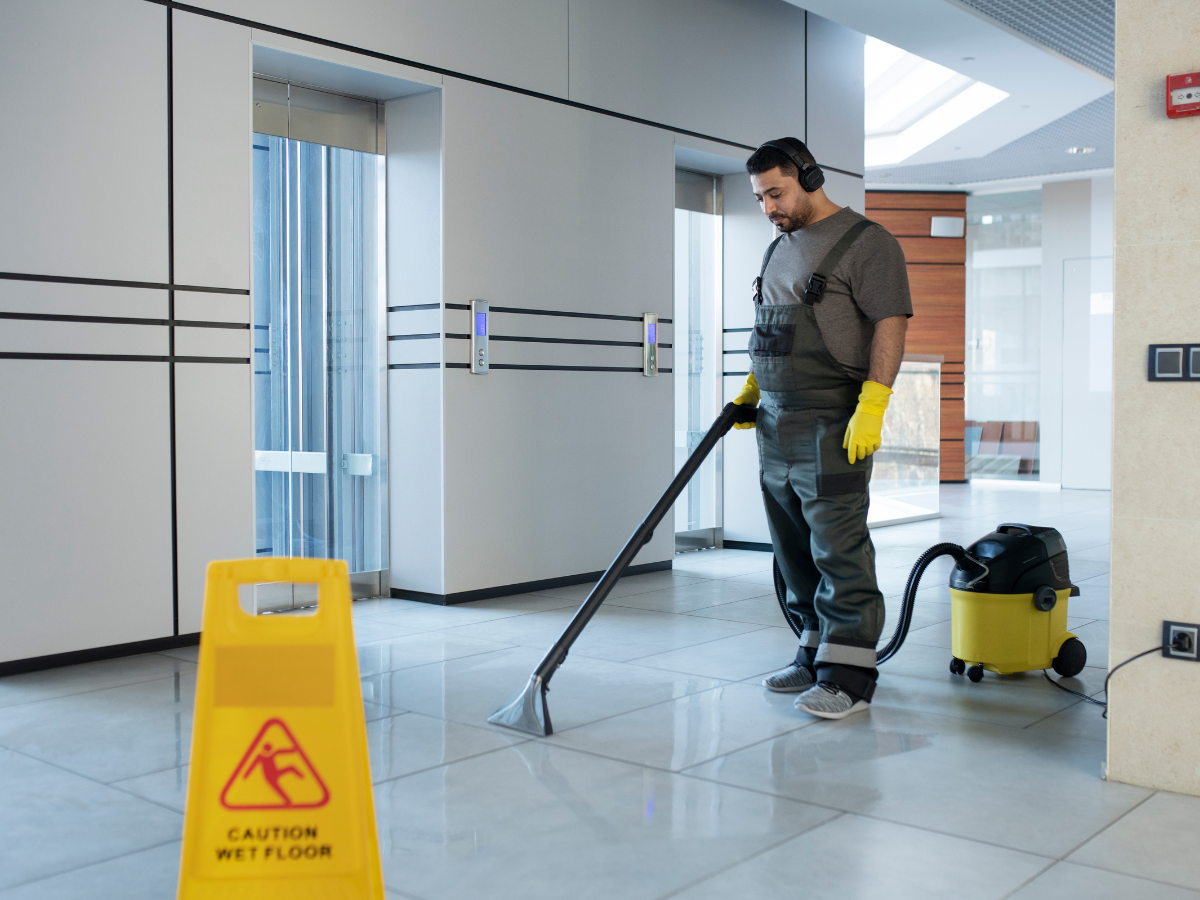
Commercial floor cleaning is the systematic removal of soiling, contamination, bacterial load and surface degradation from flooring in business environments using methods, equipment and chemistry matched to the specific floor substrate, contamination type and the regulatory standard that applies to the site. It covers aged care corridors in regional Victoria, commercial kitchens under the Australia New Zealand Food Standards Code, retail floors in high-traffic centres and warehouses across every Australian state.
What separates commercial floor cleaning from mopping is technical precision. Apply the wrong chemistry to polished concrete and you dissolve the densifier that produces the surface finish. Use a single-disc pad machine on profiled rubber gymnasium flooring, and bacterial growth begins in the pooled surface water within 24 hours. Work Health and Safety legislation places a standing legal duty on every Australian business to maintain floors that are clean, dry and slip-resistant, a duty with financial penalties and civil liability attached to failures.
This guide covers the floor types, cleaning chemicals, equipment, service scopes, pricing and provider selection criteria that determine whether a commercial floor cleaning program protects the floor asset or degrades it.
What Commercial Floor Cleaning Actually Is and Why It Is Not the Same as Mopping a Floor?
Commercial floor cleaning is the systematic removal of soiling, contamination, bacterial load, and surface degradation from flooring in business environments, using methods, equipment, and chemistry matched to the specific floor substrate, contamination profile, and the regulatory standard that applies to the site.
A mop and bucket move contaminated water from one part of a floor to another. The string mop head absorbs bacteria, grease and food debris from the first section of floor it contacts. Every subsequent pass redistributes that contamination across the surface. The floor looks wet, which reads as clean to an untrained eye. It is not. The bacterial load has been spread, not removed. The soiling has been thinned, not extracted. In a domestic setting, this is an inconvenience. In a commercial kitchen, an aged care corridor, a childcare floor or a food processing facility, it is a compliance failure and a genuine infection risk.
The Four Dimensions That Define Commercial Floor Cleaning
Commercial floor cleaning differs from domestic cleaning in four dimensions. The scale of floor area is the obvious one. Less obvious but more important is the technical dimension: matching the correct cleaning method, the correct commercial floor cleaning chemicals and the correct commercial floor cleaning equipment to each specific floor substrate and each specific contamination type.
Apply the wrong chemistry to a polished concrete floor, and you strip the surface sealer that took three days and several thousand dollars to apply. Use a rotary pad machine on a profiled rubber gymnasium floor, and the pad catches in the surface texture, leaving behind dirty water that pools in the pores and generates odour within 48 hours. Use an alkaline degreaser on a timber floor sealed with a polyurethane finish, and you attack the coating chemistry directly.
The fourth dimension is regulatory. Australian businesses operate under Work Health and Safety legislation that places a legal duty on every person conducting a business or undertaking to ensure floors remain clean, dry, slip-resistant and free from hazards, not on a best-efforts basis, but as a standing obligation with documented financial penalties and reputational consequences for non-compliance.
The Core Components of Commercial Floor Cleaning and How They Work Together
A floor substrate is the base material from which the floor surface is constructed. Its attributes include porosity, surface hardness, chemical resistance, moisture tolerance and slip resistance coefficient. Vinyl composite tile has a porosity near zero at the surface of an intact sealed layer and a moderate porosity in unprotected areas. Polished concrete has a porosity determined by the densifier treatment applied during the grinding and polishing process. Grout in a tiled floor has a porosity substantially higher than the tile itself, which is why grout lines absorb contamination and discolour at a rate the surrounding tile does not.
The floor finish or protective coating is a separate entity from the substrate beneath it. Its attributes include film hardness, chemical resistance, cross-link density and reflective gloss units. A floor finish on a vinyl surface functions as a sacrificial protective layer. Soiling, foot traffic and cleaning activity remove it gradually. The finish is stripped periodically and reapplied in fresh layers. When this cycle is managed correctly, the substrate beneath never comes into contact with the damaging agents above it. When it is not managed, those agents reach the substrate directly and damage that is not recoverable through standard maintenance follows.
Soiling is the collective term for all surface deposits on a commercial floor. It has a soiling rate, which is how quickly contamination accumulates between cleaning visits. It has a contamination profile, which describes the types of soiling present: dry particulate, wet organic material, grease, mineral scale, biological growth or chemical residue. Each contamination type has a different adhesion mechanism and a different removal requirement. Understanding the contamination profile of a floor is the precondition for selecting a cleaning method that removes it rather than redistributing it.
Cleaning chemistry is the set of chemical products applied to the floor surface during the cleaning process. Its attributes include pH value, dilution ratio, contact time requirement, surface compatibility and regulatory certification. A product with a pH of 12 is strongly alkaline and highly effective at breaking down grease and protein-based soiling. That same pH value on an unsealed terrazzo floor initiates surface etching. The relationship between the chemistry pH and the floor substrate material determines whether a product cleans or damages.
Cleaning equipment converts chemistry into a cleaning outcome through mechanical action. Its attributes include scrubbing width, brush or pad pressure, solution dispensing rate and solution recovery rate. A walk-behind scrubber dryer dispenses cleaning solution, scrubs the floor through rotating pad or brush contact, recovers the dirty solution immediately through a squeegee and vacuum system, and leaves the floor surface damp rather than wet. The drying time for a professionally scrubbed floor is typically five to fifteen minutes in a ventilated space. The drying time after string mopping is twenty to forty-five minutes, during which a continuous slip hazard exists.
Why Commercial Floor Cleaning Demands More Than a Mop and Bucket?
- Surface Variety is Often Underestimated: Floor surfaces across Australian commercial environments vary significantly, a complexity often overlooked by procurement teams until a maintenance failure occurs.
- Micro-Environments Require Tailored Methods: A single location, such as a retail store, can feature multiple surface types (e.g., vinyl, ceramic, concrete, and carpet) with varying porosities and soiling profiles. A generic approach using a single pH-neutral cleaner across all areas is ineffective and risks failing some surfaces.
- Incorrect Chemistry Causes Hidden Damage: Using the wrong method, such as excessive alkalinity on vinyl floors, leaves chemical residues. This film attracts dirt more quickly, leading to a costly cycle of increased cleaning frequency and eventual floor stripping, all without addressing the underlying chemistry error.
- Healthcare Settings Demand Microbiological Standards: Aged care facilities are bound by the Aged Care Quality Standards. Cleaning cannot be purely visual; it must manage bacterial loads to meet the infection control frameworks necessary to protect immunocompromised residents.
- High Contamination Risks in Food Service: Under the Food Standards Code, commercial kitchens must completely remove complex contaminants (fats, oils, blood) after each service. Failure to do so allows bacteria like Salmonella and Listeria to establish in grout lines and migrate to food preparation areas.
- Specialised Programs are Not Optional: These varying facility requirements are not edge cases; they are standard operating realities. A competent commercial floor cleaning program must be intentionally designed around the specific risk profile and chemistry of the environment it serves.
What Are the Commercial Cleaning Floors?
Understanding floor substrates is the foundation of correct cleaning practice. The wrong method on the wrong surface causes damage that routine maintenance cannot undo.
1.Vinyl Composite Tile and Sheet Vinyl
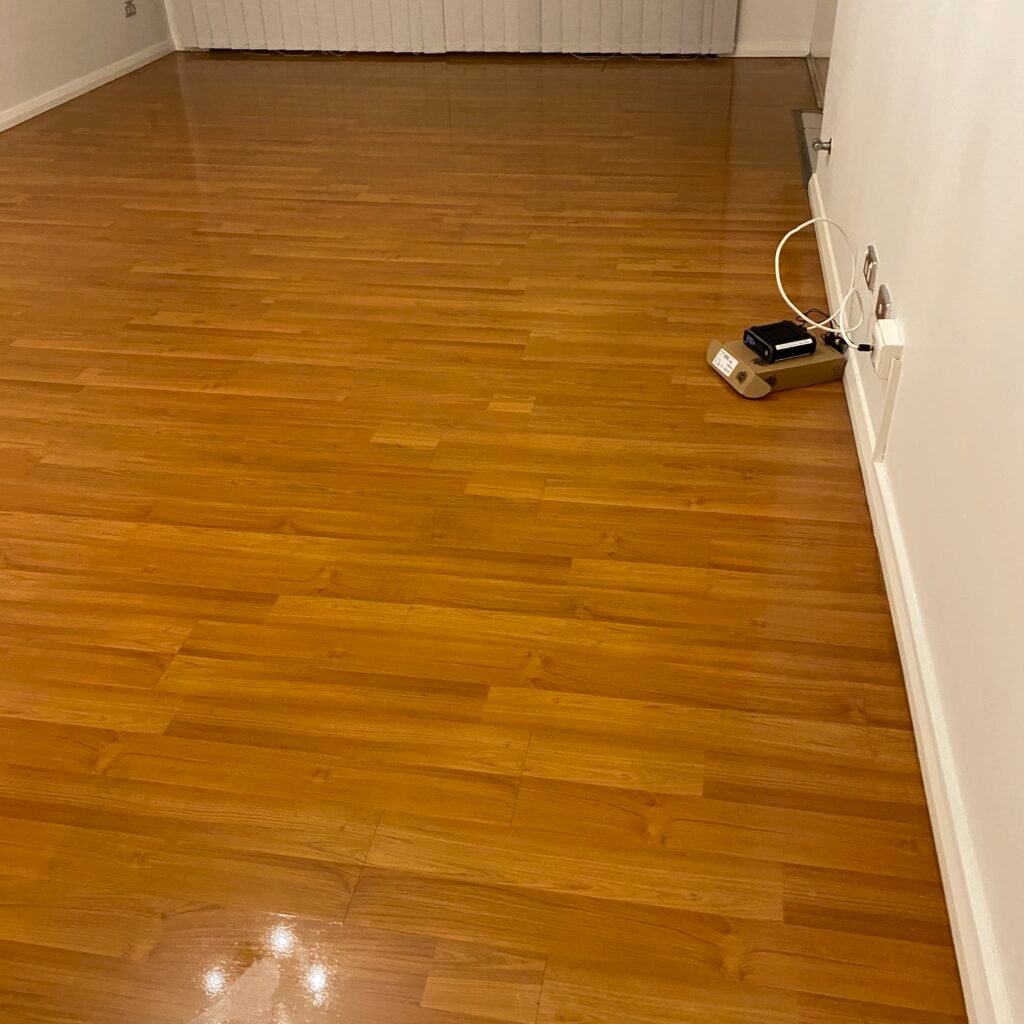
- Widely Used & Durable: Vinyl is Australia’s most common commercial flooring due to its stability, low porosity (when sealed), and moderate chemical and slip resistance.
- The Protective Coating is Crucial: The vinyl itself relies on a sacrificial, water-based polymer finish to absorb foot traffic, repel dirt, and maintain an even gloss.
- Avoid “Layering” Without Stripping: The finish naturally erodes over time. Continuously applying fresh coats over old finish creates a cloudy, yellowed film. Proper maintenance requires a periodic “strip and seal,” removing all residual finish down to the substrate before recoating.
- Control High-Traffic Zones: External entryways accumulate soil 3 to 5 times faster than midfloor areas. Using barrier matting drastically reduces dirt transfer onto the vinyl, extending the time needed between expensive deep cleans.
2. Ceramic and Porcelain Tile
- The Tile vs. Grout Problem: While the tile surface itself is non-porous and easy to wipe, the cement-based grout between the tiles is highly porous and readily absorbs water, oils, and dirt.
- Mopping Makes Grout Worse: Routine surface mopping pushes dirty cleaning water directly into the porous grout joints. This causes the grout to darken and breed odour-producing bacteria over time.
- Deep Cleaning Requires Agitation: Surface cleaning isn’t enough for grout. It requires strong alkaline degreasers, adequate chemical dwell time, and mechanical brush scrubbers that reach down into the joints to extract the contamination.
- Always Seal the Grout: Cleaning porous grout without sealing it afterwards means it will turn black again within weeks. Applying a sealer blocks absorption and extends the lifespan of your deep clean.
3. Polished Concrete
- Surface Composition: Polished concrete relies on chemical densifiers for its hardness, mechanical grinding for its gloss, and surface sealers for abrasion resistance.
- Acids and Abrasives Ruin the Finish: Acidic cleaners (pH below 6) dissolve the protective densifier, while abrasive scrubbing pads scratch the surface and permanently dull the gloss.
- Gentle Cleaning is Mandatory: Proper maintenance strictly requires highly diluted, pH-neutral (or slightly alkaline) cleaners. These must be applied using non-abrasive tools like soft-bristle scrubbers or microfibre mops, followed by dry buffing.
- Bad Maintenance Leads to Costly Regrinds: Incorrect cleaning gradually degrades the original gloss standard. Once ruined, the only fix is an expensive and disruptive mechanical regrind, which costs far more than implementing the correct cleaning program early on.
4. Hardwood Timber
- Highly Moisture Sensitive: Timber is hygroscopic (water-absorbing). Using excess water during cleaning causes boards to swell and cup, lifts the surface finish, and can eventually cause structural subfloor damage.
- The Finish Determines the Method: The chemical makeup of the floor’s coating dictates how it must be cleaned:
- Oil-finished timber: Requires specific oil-compatible cleaners to nourish the wood rather than stripping it.
- Polyurethane-coated timber: Requires strictly low-moisture, pH-neutral solutions that won’t degrade the chemical coating.
- Laminate is Especially Vulnerable: Commercial laminate flooring tolerates even less moisture than solid wood. Using a steam mop on laminate instantly voids the manufacturer’s warranty and causes irreversible peeling (delamination).
5. Terrazzo
- Composite Composition: Terrazzo is a polished mix of marble or granite set in an epoxy or cement binder. Its porosity depends heavily on the binder type and whether a surface sealer is used.
- Highly Acid Delicate: Acidic cleaning chemicals permanently burn (etch) cement-based terrazzo. Even mild acids create dull, uncorrectable patches on the surface.
- Damage Requires Costly Specialists: Standard cleaning cannot fix acid damage. Repairing it requires invasive restoration work like diamond grinding or recrystallisation by specialised technicians.
- Restoration Over Replacement: Even heavily neglected or scratched terrazzo can be professionally fully restored to “like-new” condition. As long as the subfloor is stable, restoration is almost always more economical than completely replacing the floor.
6. Epoxy Resin Floors
- Heavy Duty Resilience: Standard in demanding environments (kitchens, labs, workshops), epoxy is non-porous, chemically resistant, handles thermal shock, and easily incorporates anti-slip textures.
- Three-Phase Cleaning Required: Heavy decontamination requires alkaline degreasers first to cut grease and proteins, followed by a thorough water rinse, and finishing with a neutral-pH clean to protect the surface.
- Mops Fail on Anti-Slip Textures: The embedded aggregate that provides slip-resistance creates tiny crevices that trap grease. Standard mopping just skims the surface, leaving grease trapped in the texture.
- Deep Agitation is Mandatory: To properly clean textured epoxy, a cylindrical brush machine must be used to mechanically agitate and pull the contamination out from between the aggregate particles.
6. Regupol Rubber and Resilient Sport Floors
- Texture Makes Mopping Counterproductive: The raised ridges and channels that give rubber flooring its slip resistance make mops useless. Mops catch on the profile and pool dirty water inside the crevices rather than extracting it.
- High Biological Contamination Load: Gym floors accumulate heavy loads of sweat, skin oils, shoe dirt, and biological material that settle deep into the porous texture.
- Hidden Bacteria and Rapid Odour: Wet dirt left in rubber pores breeds bacteria and severe odours within 24 to 48 hours. A rubber floor can look perfectly clean when dry but still harbour dangerous bacterial loads deep within its texture.
- Requires Specialised Mechanical Extraction: Effective cleaning demands dual-cylinder brush machines. Counter-rotating brushes dig deep into the channels to lift the dirt, while an integrated vacuum recovery system instantly removes the contaminated water.
- Critical Fast Drying: Instant water recovery by the cleaning machine is mandatory to ensure the floor doesn’t remain wet and slip-hazardous when training sessions resume.
Commercial Floor Cleaning Chemicals
Commercial floor cleaning chemicals are not interchangeable. Each product class has a specific function determined by its pH, its active ingredient chemistry and its formulation for a defined surface and contamination type.
1. Alkaline Degreasers
- Mechanism: Operates at pH 10–13 to turn fats and oils into water-soluble compounds (saponification) that can be flushed away.
- Dilution is Critical: Applying incorrect concentrations either fails to clean (too weak) or completely strips protective floor coatings (too strong).
- Thorough Rinsing Mandatory: Especially in food environments, leaving unrinsed chemical residue constitutes a severe contamination risk.
2. Sanitisers and Disinfectants
- They Do Not Clean: Sanitisers reduce bacterial loads on surfaces that have already been cleaned.
- Contact Time is Essential: The product must remain wet for its specified dwell time; mopping it dry immediately destroys its antimicrobial effect.
- Pathogen Specific: The chemistry must match the threat (e.g., standard sanitisers fail against C. diff spores, which require specific sporicidal bleach products).
3. Stripping Chemicals
- Not Cleaners, But Degradation Agents: Highly alkaline (pH 12–13) chemicals specifically designed to melt away layers of old floor finish.
- Exact Dilution Required: Under-dilution attacks the actual floor substrate, while over-dilution leaves residual finish behind.
- Crucial for Re-coating: If the old finish is not completely stripped, entirely new floor coatings will peel, lift, or discolour within weeks.
4. Floor Sealers and Finishes
- Sealers Prep the Floor: Penetrating products that fill the microscopic pores of concrete, terrazzo, or tile.
- Finishes Take the Damage: Sacrificial top coatings that provide gloss, hardness, and wear durability over the sealer.
- Match to Traffic Load: Finish selection must be strictly aligned with foot traffic; low-traffic finishes fail quickly in heavy areas, while industrial finishes are too difficult to strip in small offices.
5. Commercial Kitchen Floor Cleaning Chemicals
- The Dual Obligation: Kitchen floors require the physical removal of heavy grease/waste and the microbiological reduction of pathogens.
- Enzyme Cleaners for Deep Cleaning: These biologically digest fats and proteins but require long contact times, making them ideal for overnight treatments rather than active service periods.
- Acidic Descalers: Used to break down hard-water mineral scale around drains, but must be kept far away from porous grout or incompatible metals to prevent damage.
Commercial Floor Cleaning Equipment
The equipment selected for a commercial floor cleaning project determines the cleaning outcome more than any other variable. A correct chemical applied with the wrong equipment produces a floor that is partially cleaned at best and damaged at worst.
- Walk Behind Scrubber Dryers: These machines automatically dispense solution, scrub the floor, and instantly vacuum up the dirty water. For maximum efficiency, their tank size and physical footprint must be carefully matched to the facility’s layout.
- Rotary Floor Machines: These single-disc machines use interchangeable pads at varying speeds to perform different tasks. Low speeds are used for heavy scrubbing and chemical stripping, while high speeds use friction to polish floors to a high-gloss shine.
- Ride-On Scrubber Dryers: Built for massive spaces like supermarkets and warehouses, these machines can rapidly clean up to 8,000 square metres per hour. Because they represent a major capital investment, equipment hire is often a smarter alternative for many sites.
- Dual Cylinder Brush Scrubbers: Essential for highly textured floors like gym rubber, textured epoxy, and deep grout. Unlike flat pads that skate over the surface, their counter-rotating cylindrical brushes dig deep into crevices to pull out trapped dirt.
- Pressure Washers and Hot Water Extractors: Required for exterior surfaces to forcefully blast away tyre marks, chewing gum, and compacted dirt that indoor scrubbers cannot handle. Hot water units are highly recommended for greasy areas because heat rapidly breaks down oils.
- Microfibre Flat Mop Systems: Microfibre chemically and physically traps bacteria and dust, making it vastly superior to traditional string mops. Implementing colour-coded or single-use microfibre pads effectively eliminates the severe cross-contamination risks of bucket mopping.
Commercial Floor Cleaning Process: Step by Step Guide
Understanding the cleaning process in sequence allows facility managers to evaluate whether a proposed service scope is professional or partial.
1. Pre-Clean Assessment and Floor Walk
A professional cleaning cycle always begins with a site assessment to identify floor types, heavy soiling, and existing damage. This critical quality control step ensures that operators adjust their chemistry and methods to the floor’s real-time condition, preventing the accidental damage caused by blindly following a standard program.
2. Loose Soiling Removal
Hard floor areas are dust mopped or vacuumed before any wet cleaning process begins. Applying wet cleaning solution to a floor that has not been pre-swept pushes loose soiling across the floor surface ahead of the scrubbing head, reduces the effective concentration of the cleaning solution through dilution with dry particulate, and results in a floor that requires additional passes to achieve the same cleaning outcome as a properly prepared surface.
In carpeted zones, vacuuming is the primary cleaning method for routine maintenance visits, with extraction or encapsulation cleaning scheduled at periodic intervals.
3. Chemical Application and Dwell Time
Pre-diluted cleaning solution is applied to the floor surface at the correct concentration for the contamination level and floor type. In areas with heavily soiled commercial kitchen floors, entry zones, and bathroom amenities, the chemistry is allowed to dwell time before mechanical action begins. Dwell time allows the chemical to begin breaking the bond between the contamination and the floor surface, reducing the mechanical effort required to lift the soiling and improving the cleaning outcome for the same number of scrubbing passes.
4. Mechanical Scrubbing and Solution Recovery
Scrubbing machines must be operated in methodical, overlapping passes using surface-specific settings. Crucially, the machine’s squeegee and vacuum recovery system must instantly extract the dirty water; any streaks left behind mean the contamination is just evaporating back into the floor.
5. Spot Treatment and Detail Cleaning
Large machines cannot reach edges, corners, and under equipment, making manual detail cleaning mandatory. If these peripheral areas are neglected, the bacteria that pool there will rapidly multiply and spread right back onto the freshly cleaned main floor. This is also the stage where stubborn, localised stains receive targeted chemical treatments.
6. Inspection and Wet Floor Management
Removing “wet floor” signs before a floor is 100% dry is a severe breach of safety laws that instantly voids any legal defence against slip-and-fall claims. Keeping safety signage in place until the floor is verifiably dry is a non-negotiable standard of a professional cleaning operation.
7. Periodic Protective Coating Application
While routine scrubbing removes dirt, it cannot replace the protective floor finish that erodes under daily foot traffic. To prevent irreversible damage and delay an expensive full “strip-and-seal,” floors require periodic “recoating” a fast, cost-effective process of applying fresh layers of finish over the cleaned surface.
How Often Commercial Floors Should Be Cleaned?
- Base Frequency on Reality, Not Schedules: Cleaning schedules must be driven by the site’s actual contamination rate, and how fast the floor realistically becomes visually or microbiologically unsafe.
- High-Risk Demands High Frequency:
- Commercial Kitchens: To meet food safety codes, they generally require deep cleaning after every service period (often 2-3 times a day).
- Aged Care: Demands rigorous daily cleaning, plus immediate response protocols for unpredictable biological spills to protect vulnerable residents.
- Commercial Kitchens: To meet food safety codes, they generally require deep cleaning after every service period (often 2-3 times a day).
- Low Risk Allows Flexibility: Conversely, a standard corporate office with moderate traffic can safely operate on a reduced frequency of 3-4 days a week.
Routine Maintenance Frequency by Sector
|
Sector
|
Hard Floor Routine
|
Hard Floor Deep Clean
|
Notes
|
|---|---|---|---|
|
Commercial kitchen
|
After every service (1 to 3 times daily)
|
Weekly intensive
|
Food Standards Code obligation
|
|
Aged care
|
Daily
|
Monthly
|
Infection control framework
|
|
Healthcare / hospital
|
Daily minimum
|
Weekly to monthly by zone
|
AS/NZS IPC standards
|
|
Retail (high traffic)
|
Daily
|
Monthly
|
Entry zone additional attention
|
|
Schools and education
|
Daily during term
|
End of term deep clean
|
Gymnasium floor separate program
|
|
Office (suburban)
|
3 to 4 times weekly
|
Quarterly
|
Adjusted for actual occupancy
|
|
Gymnasium / fitness
|
Daily
|
Monthly rubber floor restoration
|
Odour and bacteria risk
|
|
Warehouse / industrial
|
Weekly to fortnightly
|
Quarterly or biannual
|
Scale requires ride-on equipment
|
Commercial Floor Cleaning Services in Australia
Professional commercial floor cleaning services in Australia range from routine scheduled maintenance to intensive restoration programs. The distinction between these service categories is important because the correct service scope determines whether the floor is maintained or merely cleaned.
Routine Maintenance
Routine commercial floor cleaning covers the scheduled maintenance visits that keep floors in a consistent operational condition between deep cleaning and restoration events. On hard floor areas this includes pre-sweep or vacuuming, damp mopping or scrubber dryer cleaning with appropriate chemistry, detail cleaning of edges and corners, and wet floor signage management until the surface dries. Routine maintenance frequency is set by the site conditions described above.
Periodic Deep Cleaning
Deep cleaning cycles are scheduled every one, three or six months depending on floor type and traffic. Strip and seal treatments on vinyl floors, scrub and recoat programs on sealed surfaces, grout cleaning on tiled areas and diamond pad maintenance on polished concrete fall into this category. A deep cleaning visit restores the surface to a condition that routine maintenance can then maintain — it is not an alternative to routine maintenance, and it is not a substitute for a restoration program where one is required.
Restoration Cleaning
Restoration is required when a floor surface has deteriorated beyond what periodic deep cleaning can address. Terrazzo grinding and recrystallisation, concrete grinding and re-polishing, hardwood sanding and recoating, and heavy-duty vinyl strip programs covering multiple layers of degraded old finish are all restoration activities. Restoration work requires specialist equipment, trained operators and working windows that allow the surface to be fully out of service while work is completed. It is priced substantially differently from maintenance programs and is not a routine item in an annual cleaning budget — it is a capital expenditure on floor asset condition.
Emergency and Spill Response
Flooding events, sewage incidents, chemical spills and acute biological contamination events require immediate professional response. The window between the incident and professional intervention determines the extent of surface damage and the time required to return the area to a safe and compliant condition. A cleaning provider with documented 24-hour availability and spill response protocols reduces both the physical damage and the liability exposure that follows an unaddressed floor contamination event.
How Much Does Commercial Floor Cleaning Cost in Australia?
Pricing for commercial floor cleaning in Australia varies by floor area, floor type, cleaning frequency, contamination level, equipment requirements and geographic location.
|
Service Type
|
Typical Price Range
|
Key Variables
|
|---|---|---|
|
Routine hard floor maintenance (per visit)
|
$80 to $350 for small to medium sites
|
Area, frequency, floor type
|
|
Commercial kitchen floor cleaning
|
$150 to $500 per service
|
Grease level, area, timing window
|
|
Strip and seal (vinyl)
|
$4 to $9 per square metre
|
Condition, coats required, site access
|
|
Scrub and recoat (vinyl)
|
$2 to $4 per square metre
|
Existing finish condition
|
|
Tile and grout deep cleaning
|
$5 to $12 per square metre
|
Contamination level, grout condition
|
|
Polished concrete maintenance
|
$3 to $7 per square metre
|
Diamond pad restoration level
|
|
Gymnasium rubber floor restoration
|
$4 to $8 per square metre
|
Surface condition, cylinder machine requirement
|
|
Floor restoration (terrazzo, concrete)
|
Site-specific, specialist quotation
|
Degree of deterioration, equipment required
|
Never evaluate cleaning providers strictly on “cost per visit.” A cheap cleaner who degrades the floor and forces frequent, expensive restoration work actually costs far more annually than a premium provider. Furthermore, the true financial value of professional cleaning lies in liability protection. Its cost is negligible compared to the devastating expense of a WorkSafe investigation or a slip-and-fall lawsuit stemming from poor maintenance.
What to Look For in a Commercial Floor Cleaning Provider: The Right Questions to Ask
What Equipment Will You Use on Our Floor Type?
A credible answer names the specific machine, explains why it is suited to the floor substrate at this site, and describes how solution recovery will be managed. An answer that mentions mopping, without specifying the mop system type and whether a scrubber dryer will be used on hard floor areas, is a partial answer that leaves the quality of the proposed cleaning outcome undefined.
What Chemicals Do You Use and Are They Appropriate for Our Floor Surface?
A professional provider specifies the pH of the cleaning products they will use, confirms compatibility with the floor substrate type and any applicable coatings, and provides safety data sheets for each product on request. A provider who applies a single floor cleaner to every floor type without consideration of substrate or contamination profile is demonstrating a knowledge deficit that will eventually produce a surface damage event.
How Do You Handle the Transition Between Different Floor Types on the Same Site?
A large commercial site typically has multiple floor types. The correct method, pad or brush type, chemistry and dilution rate change between them. A provider who describes modifying their approach for each zone is demonstrating appropriate practice. A provider who describes the same process for all floor types across the site is not.
What Insurance Do You Hold?
A minimum of $10 million public liability insurance is the standard requirement for commercial site cleaning work in Australia. WorkCover or workers’ compensation insurance for all on-site staff is also mandatory. Requesting a certificate of currency before work commences is reasonable and professional, not an unusual or excessive request.
Do You Hold Any Quality or Environmental Certifications?
ISO 9001 quality management certification, ISO 14001 environmental management certification and ISO 45001 occupational health and safety certification indicate that the organisation operates systematic processes that are subject to external audit. Triple ISO accreditation is held by a small number of Australian commercial cleaning companies and represents a meaningful commitment to documented process quality rather than operator-level variation.
Can You Provide References From Comparable Commercial Sites?
A provider with successful aged care floor maintenance programs may lack the knowledge and equipment for commercial kitchen environments. Match the reference sites offered to your specific sector, floor types and contamination profile, not just to the general category of commercial cleaning.
Summary
Commercial floor cleaning is an asset management, safety management and risk management discipline. It is not a housekeeping line item, and treating it as one produces outcomes that eventually cost more than a correctly scoped professional program would have cost from the beginning.
The floor substrate is a capital asset with a defined service life. The floor finish is a sacrificial protective layer that requires correct maintenance to function. The bacterial load on a commercial floor is a measurable risk variable with documented health and regulatory consequences when it exceeds applicable standards. The cleaning chemistry and equipment applied to the floor either preserve those assets and manage those risks, or degrade them progressively through misapplication.
A commercial floor cleaning program that is built on a competent assessment of the floor types, contamination profile, regulatory obligations and operational constraints of the specific site will consistently deliver better outcomes than a program priced on cost per visit without consideration of those variables. The floor communicates the operational standard of the business to every person who enters. The investment in maintaining it correctly is not a facility cost. It is a business standard decision with compounding returns across the life of the building.
Frequently Asked Questions About Commercial Floor Cleaning
What Commercial Floor Cleaning Chemicals Are Safe for Food Preparation Areas?
Products specifically formulated and certified for use in food production and preparation areas carry food-safe certification and are registered or approved under applicable Australian regulatory frameworks. Standard degreasers and floor cleaners that are not labelled for food contact environments must not be applied in commercial kitchens without thorough rinsing and confirmation that no chemical residue remains on the floor surface. Safety data sheets and product labels specify approved applications. Always verify chemical suitability for food areas before application.
What Is the Difference Between Scrubbing and Stripping a Commercial Floor?
Scrubbing removes surface soiling from the floor using cleaning solution and mechanical pad or brush action. It cleans the floor finish surface. Stripping removes the floor finish itself using a high-alkalinity chemical stripper and aggressive pad contact, taking the surface back to the bare substrate so that fresh finish can be applied in full adhesion to the floor. Scrubbing maintains the floor. Stripping resets it.
How Long Does a Commercial Floor Take to Dry After Cleaning?
Walk-behind scrubber dryers recover cleaning solution during the cleaning pass, leaving the surface damp rather than wet. Drying time in a ventilated space is five to fifteen minutes. Mop-cleaned floors take twenty to forty-five minutes or longer to dry, during which wet floor signage must remain in place. The extended wet time from mop-based cleaning is a sustained slip hazard window and an operational downtime consideration that scrubber dryer cleaning eliminates.
Can a Damaged Commercial Floor Be Restored Without Full Replacement?
In most cases, yes. Professional restoration techniques including diamond grinding, recrystallisation, terrazzo polishing, timber sanding and recoating, and intensive vinyl strip-and-reseal programs can return floors that appear beyond serviceable condition to an acceptable or near-original state. A professional floor assessment by a restoration specialist is the correct first step before committing to a full floor replacement that may not be necessary.
What Are the Health Benefits of Professional Floor Cleaning?
Professionally cleaned and sanitised floors reduce bacterial populations including E. coli, Salmonella, Staphylococcus aureus and respiratory pathogens to levels defined as safe under applicable frameworks. They remove allergens including dust mite material, mould spores and particulate that accumulate in floor surface texture and are disturbed by foot traffic. In healthcare, aged care and food service environments, floor sanitisation is directly linked to measurable infection prevention outcomes. A professionally maintained floor is a health intervention, not merely an aesthetic one.