
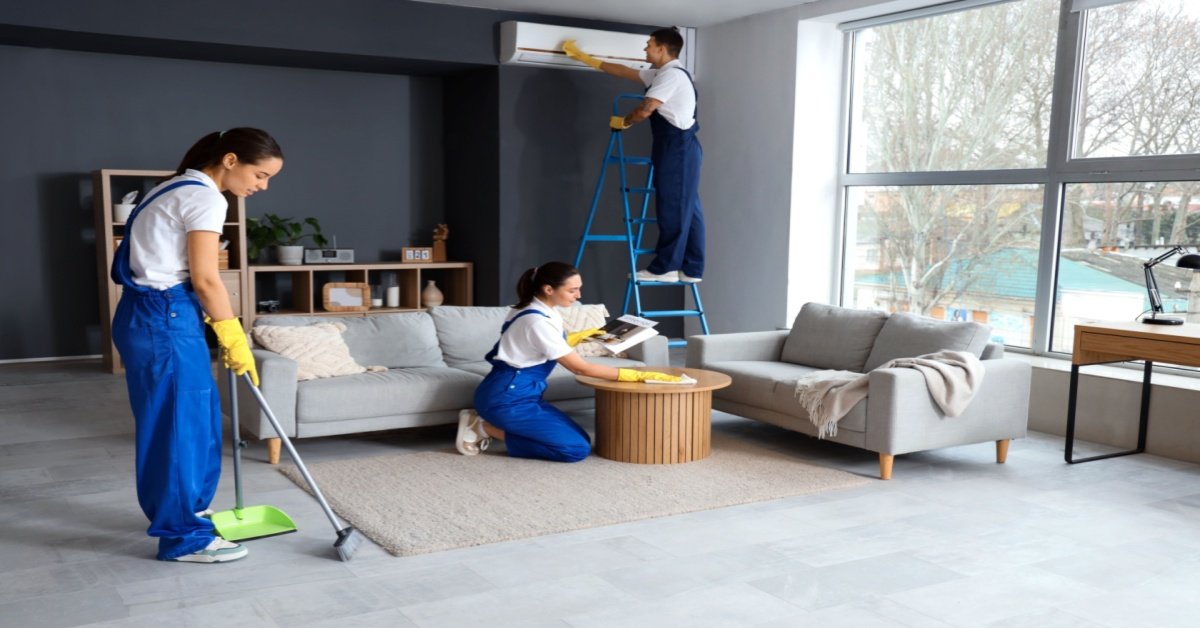
Moving a business out of a commercial space is a different kind of pressure from moving house. There are lease exit clauses to read carefully, condition reports to cross-reference, property managers to satisfy, and a bond or security deposit sitting on the line. The cleaning standard expected at the end of a commercial lease is not the same as the standard expected at the end of a residential one, and the consequences of falling short are considerably more expensive.
This guide covers what end of lease commercial cleaning actually involves, what Sydney businesses are most commonly caught out by, how the process works from booking through to final inspection, and what separates a cleaning engagement that protects your bond from one that creates more problems than it solves.
What Is End of Lease Commercial Cleaning?
A commercial end-of-lease clean is a structured cleaning programme delivered against the specific standards set out in a lease agreement and documented on the property’s condition report. It is not a general deep clean. It is a targeted restoration of the premises to the condition recorded at the start of the tenancy, adjusted for what is legitimately attributable to fair wear and tear.
The distinction matters because the stakes are different. A residential tenant who falls short on cleaning typically negotiates with the landlord and forfeits part of the bond. A commercial tenant who fails a final inspection may be facing deductions from a substantially larger security deposit, a formal dispute with a commercial property manager, or charges for a third-party cleaning engagement organised by the landlord, which will cost more than if it had been handled properly from the start.
Commercial vs Residential End of Lease: Key Difference
The cleaning obligations attached to a commercial lease are determined by the specific terms of that lease, not by a standardised set of rules. In New South Wales, residential tenancies are governed by the Residential Tenancies Act 2010, which sets out tenant protections and standardised expectations. Commercial tenancies, including retail premises covered by the Retail Leases Act 1994 and other commercial arrangements, operate under the specific terms of the lease document itself.
What this means practically is that what a commercial tenant is required to clean, how thoroughly, and to what verified standard, is defined by what was written into the agreement when the premises were taken on. Some leases require a professional cleaning certificate. Some specify that carpets must be steam cleaned by a licensed operator. Some require pest control before handover. These are not assumptions; they are contractual requirements, and overlooking them is what causes bond disputes.
At Spotzi, the first thing discussed when a commercial tenant makes contact for an end-of-lease clean is the relevant lease clause and the original condition report. The cleaning scope is built from those documents, not from a generic checklist applied to every job.
What the Lease Agreement Actually Expects of You?
Most commercial lease agreements in Australia contain a “make good” clause or a “reinstatement” clause that defines the condition in which the premises must be returned. Some are broad. Some are highly specific, requiring professionally cleaned carpets, freshly painted walls where marked, or a formal cleaning certificate from an accredited provider. Some require the tenant to commission a post-clean inspection before handover.
Reading this clause carefully alongside the original condition report is the single most important thing a commercial tenant can do before booking a clean. It tells you what the property manager will be checking, and it tells a professional cleaning company what scope of work is actually required.
What Gets Missed and What Gets Disputed at Inspection?
The areas most frequently contested in commercial end-of-lease inspections are not always the obvious ones. Floors, kitchens, and bathrooms are cleaned because they are visible. The disputes tend to arise in the areas that are cleaned last, cleaned quickly, or simply overlooked.
Areas That Most Often Result in Bond Deductions
- Air conditioning vents and return air grilles are one of the most consistently overlooked areas in commercial exits. Dust accumulates visibly in grilles over months of operation and is something many property managers check specifically.
- Skirting boards, door frames, and light switch surrounds accumulate a film of grease and dust over time. In offices, smudging around light switches is particularly common and registers immediately on a walkthrough.
- Kitchen extraction fans and range hood filters in breakrooms and commercial kitchens carry grease buildup that does not come off with standard cleaning products. Specialist degreasers are required.
- High surfaces, including tops of cabinets, shelving, and office partitions, are not at eye level and are frequently missed in self-organised cleaning attempts. Property managers conducting a thorough inspection will check these.
- Internal windows and glass partitions in office environments accumulate fingerprints, smudges, and adhesive residue from signage or branding.
- Carpet in meeting rooms and corridors often carries staining and embedded soiling that a standard vacuum cannot address. Steam extraction is typically required.
- Bin areas, loading docks, and car park spaces attached to the tenancy are included in the condition report and subject to the same handover standard, but are frequently not treated as part of the clean scope.
Room by Room Commercial Exit Clean Checklist
The following table reflects the scope of a thorough commercial end-of-lease clean. It can be used to cross-reference against the condition report before booking.
|
Area
|
Scope of Work
|
|---|---|
|
All floor surfaces
|
Vacuuming, mopping, steam extraction where carpet is present
|
|
Walls and skirting boards
|
Full wipe down, mark removal, skirting board detail
|
|
Doors and door frames
|
Both sides, frames, handles, glass panels where fitted
|
|
Internal windows
|
Glass, frames, sills, tracks
|
|
External windows
|
Accessible heights, ground level, and internal side of ground floor
|
|
Kitchen and breakroom
|
Benches, sink, taps, cupboards inside and out, microwave, fridge interior, splashback, range hood
|
|
Bathrooms and amenities
|
Toilets, basins, urinals, tiles, mirrors, grout, exhaust fans
|
|
Air conditioning vents
|
Face cleaning and surrounding duct entry
|
|
Light fittings and switches
|
Fittings dusted, surrounds wiped
|
|
Reception and common areas
|
All surfaces, glass, furniture if included in scope
|
|
Storerooms
|
Full clean including shelving
|
|
Car park and bin area
|
Sweep and pressure wash where required
|
|
High surfaces
|
Tops of partitions, cabinets, shelving units
|
|
Carpet areas
|
Full vacuum followed by steam extraction
|
What Is Included in Spotzi's Commercial End of Lease Service?
The scope delivered by Spotzi on a commercial end-of-lease engagement is documented before the clean begins. This is not a list of things that might be done. It is what is agreed in writing and then verified at completion.
For standard commercial properties such as offices, the engagement covers full vacuuming and mopping of all floor areas, carpet steam extraction where carpet is present, thorough bathroom and kitchen sanitisation, internal window and glass partition cleaning, high-touch surface disinfection, wall and skirting board cleaning, air vent and grille cleaning, light fitting and switch detail, and bin area management.
For more complex commercial spaces such as warehouses, industrial units, medical clinics, or food preparation areas, the scope is expanded accordingly and confirmed before any work begins. Commercial cleaning at Spotzi is carried out with eco-friendly cleaning products that do not leave chemical residue on surfaces. This matters especially in spaces like medical practices and childcare centres that are being handed back for re-occupancy.
Commercial Property Types and Their Exit Clean Requirements
Not all commercial tenancies have the same cleaning requirements. The type of activity that took place in the space directly affects what needs to be cleaned and to what standard.
1. Office Suites and Corporate Floors
Office environments require particular attention to carpet, kitchen and breakroom areas, glass partitions and internal windows, air conditioning grilles, and reception areas. Signage adhesive residue on walls and glass is a common additional scope item in office exits. Spotzi’s office cleaning in Sydney team works in these environments regularly and understands the inspection standard that commercial property managers apply across the Sydney CBD and surrounding suburbs.
2. Retail Spaces and Shopfronts
Retail tenancies involve front-of-house areas subject to heavy foot traffic. Glass shopfronts, display windows, and signage areas require specialist attention. Back-of-house storage rooms often carry significant soiling and are frequently left to the last moment. Point-of-sale areas and service counters require thorough surface treatment.
3. Warehouses and Industrial Facilities
Industrial cleaning in Sydney at the end of a lease involves a different level of soiling than an office exit. Concrete floors may require pressure washing or industrial sweeping machines. Loading dock areas, mezzanine storage, and machinery bays require equipment appropriate to the scale and type of contamination present. Industrial lease agreements in NSW often specify floor cleaning standards and site clearing requirements that need to be confirmed against the lease document before work begins.
4. Medical Clinics and Allied Health Practices
Medical tenancies carry the highest hygiene standard of any commercial property type. Examination rooms, procedure rooms, bathroom and amenity areas, and reception and waiting areas all require thorough disinfection. Spotzi uses hospital-grade disinfectants where required, which is appropriate for medical end-of-lease engagements.
5. Schools, Childcare Centres, and Education Facilities
Education facilities require child-safe cleaning products throughout, even at the end of a tenancy where the space is being handed back for potential re-occupancy. Spotzi’s school cleaning and childcare cleaning teams are familiar with the standards expected in these environments and the products appropriate to them.
6. Gyms and Fitness Facilities
Gym environments accumulate biological matter on surfaces that standard cleaning products are not formulated to address effectively. Change rooms, shower areas, equipment areas, and reception spaces all carry elevated contamination. Spotzi’s gym cleaning in Sydney team handles these environments as part of its regular commercial cleaning work.
How to Plan the Timeline for a Commercial End of Lease Clean?
One of the most avoidable mistakes commercial tenants make is leaving the exit clean too late. A commercial space occupied for several years cannot be cleaned to the lease exit standard in a single afternoon or at 48 hours’ notice without risking the quality of the outcome.
A Practical Planning Sequence Before Handover
A simple step-by-step approach to plan your exit cleaning, stay compliant with lease terms, and avoid last-minute issues before handover.
1. Four to six weeks before handover
Read the lease exit clause carefully and locate the original condition report. Identify any specific requirements, such as carpet steam cleaning certificates, pest control, or professional cleaning documentation and begin organising these ahead of the main clean.
2. Two to three weeks before handover
Contact a commercial cleaning company to discuss scope, confirm availability, and get a written quote. Reputable cleaning companies carry schedules that do not always accommodate last-minute commercial jobs at the standard a lease exit requires.
3. One week before handover
Confirm the booking, confirm access arrangements, and ensure the space has been cleared of all furniture and personal property. Cleaners cannot clean around stored items and scope cannot be properly completed if the space is not fully vacated.
4. After the clean is completed
Photograph every area before handing back the keys. These photographs become critical documentation if a dispute arises about the condition of the property at handover.
5. At the final inspection
Attend the inspection alongside the property manager where possible. Being present means concerns can be addressed immediately rather than becoming formal claims afterwards.
What Happens If the Inspection Is Not Passed in NSW?
In New South Wales, if a property manager disputes the condition of a commercial premises at handover, the resolution process depends on the type of tenancy. Retail tenancies can be referred to the NSW Civil and Administrative Tribunal (NCAT). Other commercial tenancies are resolved through the dispute mechanisms specified in the lease or, failing that, through civil proceedings.
The most effective way to avoid this situation is to ensure the cleaning is thorough the first time, that the scope is confirmed against the condition report in advance, and that the cleaning company engaged carries a genuine and enforceable bond back guarantee.
Spotzi’s 72-hour bond back guarantee means that if a property manager raises any cleaning concern after a Spotzi engagement, the team returns within 72 hours to address it at no additional cost.
End of Lease Commercial Cleaning Across Australia
The majority of Spotzi’s commercial work is based in Sydney and across New South Wales. For businesses operating across multiple states or relocating interstate, the following is a summary of how lease exit obligations compare.
New South Wales
NSW commercial tenancies are primarily governed by the individual lease agreement. The Retail Leases Act 1994 applies to retail premises and provides tenant protections including regulated dispute resolution through NCAT. Non-retail commercial leases are governed entirely by the lease terms. Spotzi covers all Sydney regions for commercial end of lease work, including the CBD, inner west, eastern suburbs, north shore, western Sydney, and the greater metropolitan area.
Victoria
Victorian commercial tenancies operate under the Retail Leases Act 2003 (Vic) for retail premises. The standard expected for a commercial exit clean in Melbourne is comparable to Sydney. The areas most commonly disputed are consistent across both cities: carpet condition, kitchen cleanliness, air conditioning systems, and bathrooms.
Queensland
Retail tenancies in Queensland are governed by the Retail Shop Leases Act 1994 (Qld). Exit clean obligations are determined primarily by lease terms. Professional cleaning with documented scope and a written guarantee is the most reliable way to satisfy a handover inspection across Queensland commercial properties.
Western Australia
Commercial leases in WA operate under general contract law and the specific terms of the lease. Perth property managers apply exit cleaning standards consistent with eastern-state practice, documented scope, professional delivery, and verification against the original condition report are all expected.
South Australia and the Australian Capital Territory
Similar frameworks apply in Adelaide and Canberra. The key principle is the same across every Australian jurisdiction: the condition report from the start of the tenancy is the reference point, and the clean at handover needs to return the property to that documented condition, adjusted for fair wear and tear.
What to Look for When Choosing a Commercial Cleaning Company for an Exit Clean?
Not all cleaning companies have the specific experience required for commercial end-of-lease work. Choosing the wrong company results in a failed inspection and the cost of a second clean, which is precisely the outcome the engagement was intended to prevent.
A Genuine Bond Back Guarantee
A real bond back guarantee means the cleaning company returns within a defined period and addresses any issues identified by the property manager at no additional cost. The timeframe should be explicit (Spotzi’s is 72 hours) and the terms should be clear.
A guarantee is only meaningful if the company has the capacity and the track record to honour it. A sole operator or a newly established business may not be in a position to respond reliably when a guarantee is called upon.
Insurance and Staff Verification
Any cleaning company operating in commercial premises should carry current public liability insurance and workers’ compensation cover. Staff should be formally background-checked, not just verbally screened. Commercial spaces contain equipment, documents, data, and valuables, and the credentials of every person with access to those premises matter.
Every Spotzi team member is background-checked before placement, and the company is fully insured across all commercial cleaning engagements.
Experience With Commercial Tenancies Specifically
There is a meaningful difference between a company that cleans offices on an ongoing basis and a company with experience delivering exit cleans against commercial condition reports. Ask directly whether the company has delivered commercial end of lease work, how that scope is confirmed, and what happens when the property manager identifies an issue.
Eco-Friendly Products in an Exit Context
A space being handed back is often being prepared for the next occupant. Cleaning products that leave chemical residues or strong synthetic fragrances on surfaces are not appropriate in that context. Eco-friendly, biodegradable products clean effectively without leaving residues that the incoming tenant or their staff will be exposed to. This is particularly relevant when the property is being handed back to a school, childcare centre, or medical practice.
Summing Up
The end of a commercial lease is a moment where the cost of getting the cleaning wrong is measurably higher than the cost of getting it right. Bond deductions, formal disputes, third-party cleaning charges, and the time consumed by re-inspections are all real outcomes that happen to businesses that manage the cleaning themselves or engage a company without the right experience or the right guarantee in place.
Spotzi has delivered commercial cleaning in Sydney for over ten years, across offices, warehouses, industrial facilities, schools, childcare centres, gyms, and retail spaces. The team is 100% Australian owned and operated. Every cleaner is background-checked. The cleaning products used are eco-friendly without compromising performance. A 72-hour bond-back guarantee is applied to all end-of-lease engagements, and a cleaning certificate is provided on request for lease compliance purposes.
Whether the premises are a small office in Parramatta, a commercial floor in the CBD, a warehouse in Western Sydney, or a medical practice on the North Shore, Spotzi can put a documented scope and a professional team in place that gives the final inspection the best possible chance of passing the first time.
A free quote can be submitted online, or the team can be reached on 0409 948 888 seven days a week. If the lease end date is approaching, it is worth making contact now rather than closer to the date. Commercial exit cleans at the required standard take planning.
End of Lease Commercial Cleaning Frequently Asked Questions
What is included in end of lease commercial cleaning?
End-of-lease commercial cleaning covers all areas of a commercial premises against the scope defined by the lease agreement and the original condition report. This typically includes full vacuuming and mopping of all floor areas, carpet steam extraction, thorough bathroom and kitchen sanitisation, internal window and glass cleaning, wall and skirting board cleaning, air conditioning vent cleaning, high-touch surface disinfection, and bin area management. The exact scope varies by premises type and lease terms, which is why Spotzi confirms scope against the lease document before any work begins.
How is commercial end of lease cleaning different from a standard clean?
A standard commercial clean maintains day-to-day hygiene. A commercial end-of-lease clean is a complete, documented restoration of the premises to the condition specified in the lease and recorded on the original condition report. It addresses areas that are not part of routine maintenance, such as high surfaces, behind and underneath fixtures, air conditioning systems, carpet extraction, and detailed cleaning of all surfaces to an inspection-ready standard. The requirement is not that the space looks clean to the occupant. It is that it satisfies the property manager against a documented reference point.
How much does commercial end of lease cleaning cost in Sydney?
Pricing depends on the size of the premises, its current condition, the type of commercial activity that took place, and the specific scope required by the lease. Additional services such as carpet steam cleaning, pest control, or high-access window cleaning affect the total. Spotzi provides a free quote based on the actual premises and the confirmed scope.
How far in advance should a commercial exit clean be booked?
Two to three weeks before the handover date is appropriate for most commercial properties. For larger premises such as warehouses and multi-floor office buildings, four weeks or more is recommended. Last-minute bookings are sometimes accommodated but cannot be relied upon for complex commercial jobs, particularly when the lease handover has a fixed and non-negotiable date.
What is a bond back guarantee and how does Spotzi's work?
A bond back guarantee means that if a property manager identifies any cleaning issue after the clean is completed, the cleaning company returns and addresses those issues at no additional cost. Spotzi’s guarantee requires a return visit within 72 hours of any issue being raised. There is no additional charge for the return clean. The guarantee applies to all commercial end of lease engagements.
Do the cleaners bring their own equipment and products?
Yes. All equipment and cleaning products are brought by the Spotzi team as part of the service. This includes commercial floor machines, HEPA-filtered vacuums, steam extraction equipment for carpet, specialist degreasers, and eco-friendly disinfectants. The business does not need to supply anything.
Are Spotzi cleaners background-checked?
Yes. Every Spotzi team member is formally background-checked before being placed on any client site. This applies to all staff on all commercial engagements, including end of lease jobs.
Can Spotzi also handle the move-in clean at the new premises?
Yes. A move-in clean at the new commercial premises can be arranged alongside or after the exit clean. Many businesses find it practical to have both handled by the same provider to simplify coordination during a period when there are many other things to manage. Home cleaning in Sydney and commercial move-in services are both available.
Does Spotzi cover Sydney suburbs outside the CBD?
Yes. Spotzi operates across all Sydney regions, including the CBD, inner west, eastern suburbs, north shore, northern beaches, western Sydney, south-west Sydney, and the greater metropolitan area. If there is any question about a specific suburb, the team can confirm coverage directly.
What if my commercial property has specific industrial or hazardous cleaning requirements?
Industrial and specialist commercial properties are assessed individually. The scope is confirmed against the lease agreement, the condition report, and any applicable compliance requirements before work begins. Spotzi’s industrial cleaning in Sydney service covers warehouses, factories, and industrial facilities with appropriate equipment and properly trained staff.