
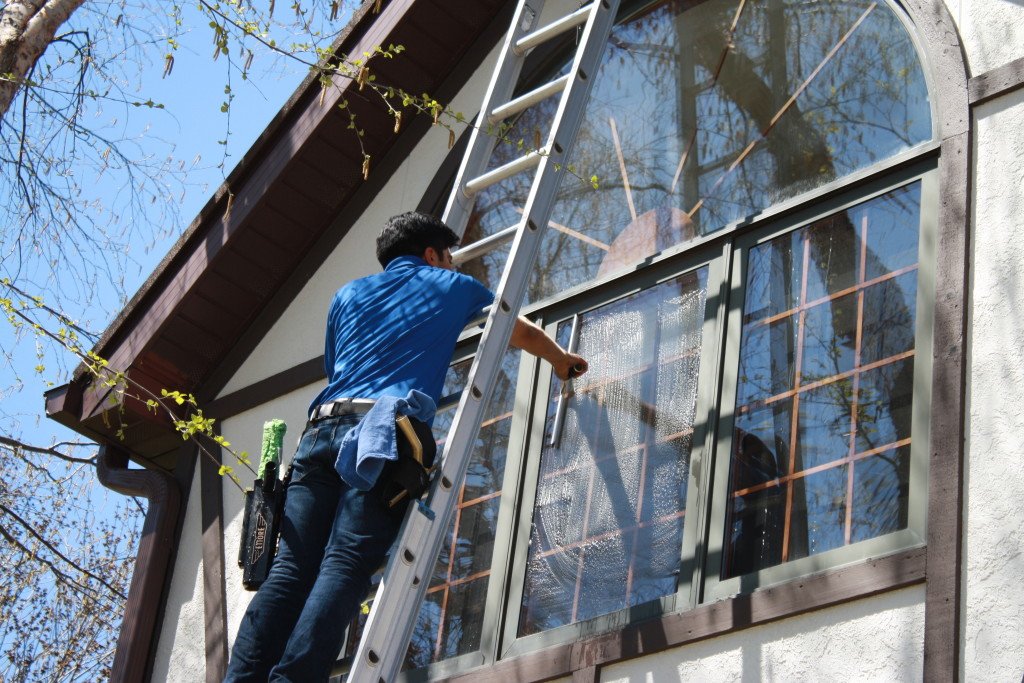
If you have ever walked past a commercial building and noticed the windows gleaming in the morning sun, chances are a professional window cleaning crew had something to do with it. For business owners and facility managers across Australia, keeping windows clean is not just a cosmetic exercise. It is a smart investment in your building, your brand, and your people.
This guide covers everything you need to know about commercial window cleaning, from what it entails to costs and how to find the right professionals in Sydney.
What Is Commercial Window Cleaning?
Commercial window cleaning is the professional cleaning of glass surfaces on business premises, including exterior facades, interior partitions, shopfronts, skylights, and high-rise glass panels. It involves specialised techniques, safety equipment, and cleaning systems designed to handle the scale and complexity of commercial properties.
Unlike residential cleaning, where a ladder and a bucket might get the job done, commercial environments are a different story altogether. The glass is larger, the buildings are taller, the cleaning schedules are more structured, and the safety requirements are far more strict. How it differs from residential cleaning:
- Commercial properties are cleaned under recurring, scheduled contracts, not just occasionally.
- The techniques and equipment are industrial-grade, not off-the-shelf consumer tools.
- Safety and compliance requirements like Safe Work Method Statements and Working at Heights certification are mandatory on most commercial sites.
- Commercial cleaning often involves multiple stories, restrictive access points, and glass facades that span entire building exteriors.
Types of commercial properties served include: office towers, retail shops, hotels and hospitality venues, restaurants and cafes, healthcare facilities, schools and universities, strata and body corporate buildings, government offices, warehouses, and industrial facilities.
Most businesses outsource window cleaning for three practical reasons: it is safer, it is more cost-effective in the long run, and it produces a noticeably better result than anything an in-house team could achieve with a mop and bucket.
Why Commercial Window Cleaning Matters for Businesses?
A lot of business owners treat window cleaning as an afterthought. But the businesses that keep their windows consistently clean are sending a very specific message to every client, customer, and employee who walks through their doors.
First Impressions and Brand Image
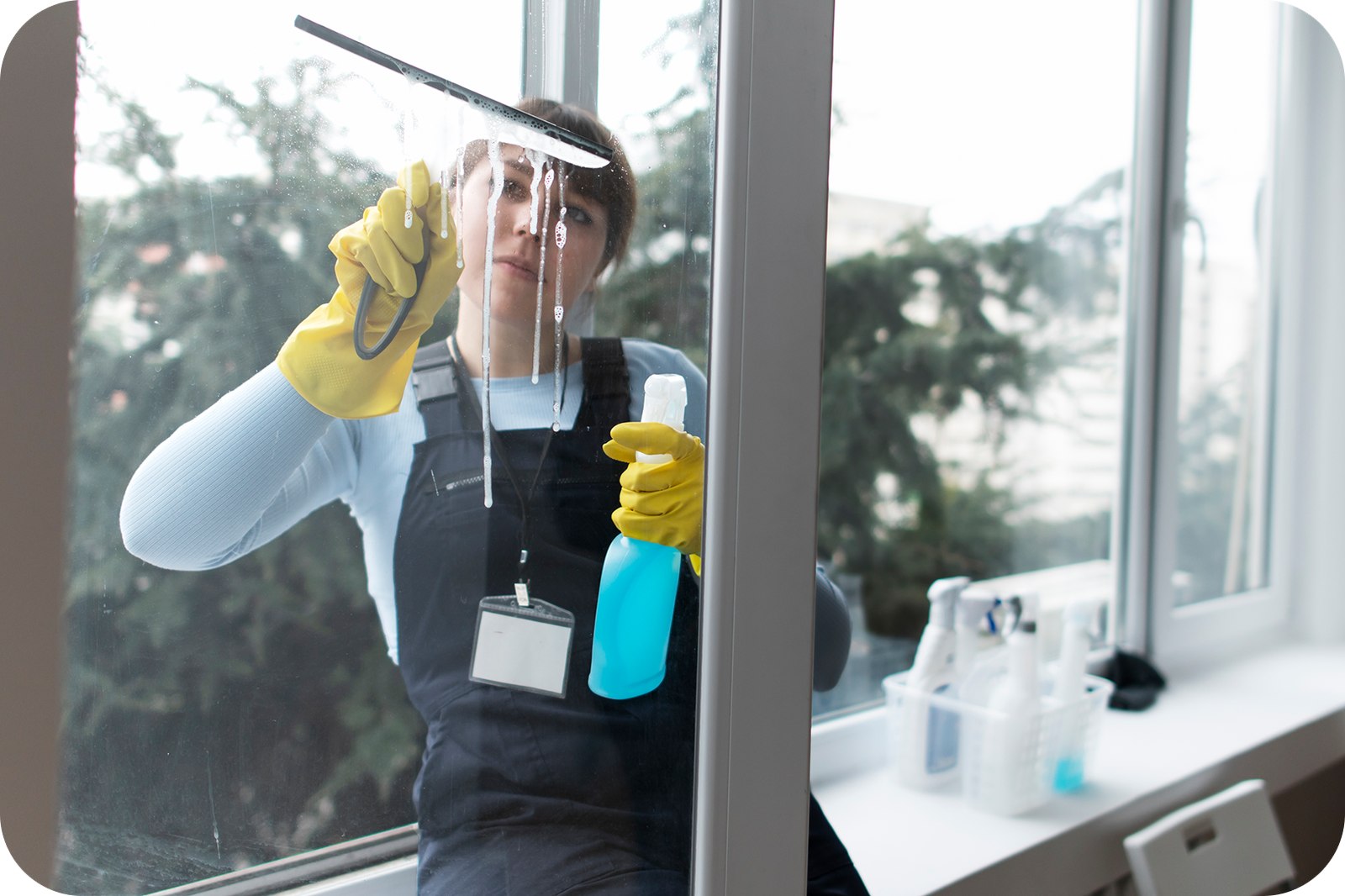
Your building is a physical representation of your brand. Dirty, streaked, or film-coated windows tell the story before your staff even says hello. Research consistently shows that consumers judge businesses by their physical appearance, and grimy windows rank high on the list of things that turn customers away.
Clean windows say you care about the details. They say your business is professional, well-managed, and worth trusting.
Boosts Productivity and Morale
Natural light is one of the most underrated workplace productivity tools available, and it costs nothing if your windows are clean. Studies from organisations including Cornell University and the World Green Building Council show that access to natural light significantly improves mood, focus, and energy levels in office employees.
When windows are coated in dust, pollution, and grime, that natural light is filtered out. The result is a dimmer, heavier working environment that most employees barely notice consciously but absolutely feel. Regular commercial window cleaning is one of the simplest ways to improve the quality of your workplace without spending on expensive fit-outs.
Window Longevity and Maintenance Savings
Glass does not last forever, especially when it is exposed to the Australian environment. In coastal cities like Sydney, salt spray from the ocean deposits itself on glass surfaces. Combined with UV radiation, pollution, and hard water mineral deposits, these contaminants etch into the glass over time and cause permanent damage.
The fix? Regular professional cleaning prevents the buildup from reaching the stage where it becomes corrosive. A good cleaning program costs a fraction of what it would take to replace degraded glass panels on a commercial building.
Health, Hygiene, and Compliance
This one matters particularly for healthcare facilities, food service venues, and any business that operates under strict hygiene standards. Dirty windows harbour dust, mould spores, and allergens, all of which circulate in the air people breathe. In environments where hygiene is regulated, window cleaning is a compliance issue, not just a cosmetic one.
Key Benefits Comparison: The business case for clean windows
|
Benefit
|
Business Impact
|
Long Term Value
|
|---|---|---|
|
Enhanced brand image
|
Attracts more clients, improves customer confidence
|
Builds long-term reputation as a professional business
|
|
Better natural light
|
Improves staff focus, reduces energy costs
|
Higher employee satisfaction and lower overhead
|
|
Window longevity
|
Prevents corrosive damage from salt and pollution
|
Avoids costly glass replacement and frame repairs
|
|
Health and hygiene
|
Reduces allergens, dust, and mould in the air
|
Supports compliance with OH&S and hygiene standards
|
Types of Commercial Window Cleaning Services
Not all commercial window cleaning is the same. The right service depends on the type of building you manage, how the glass is positioned, and the level of difficulty involved in accessing it.
Interior Window Cleaning
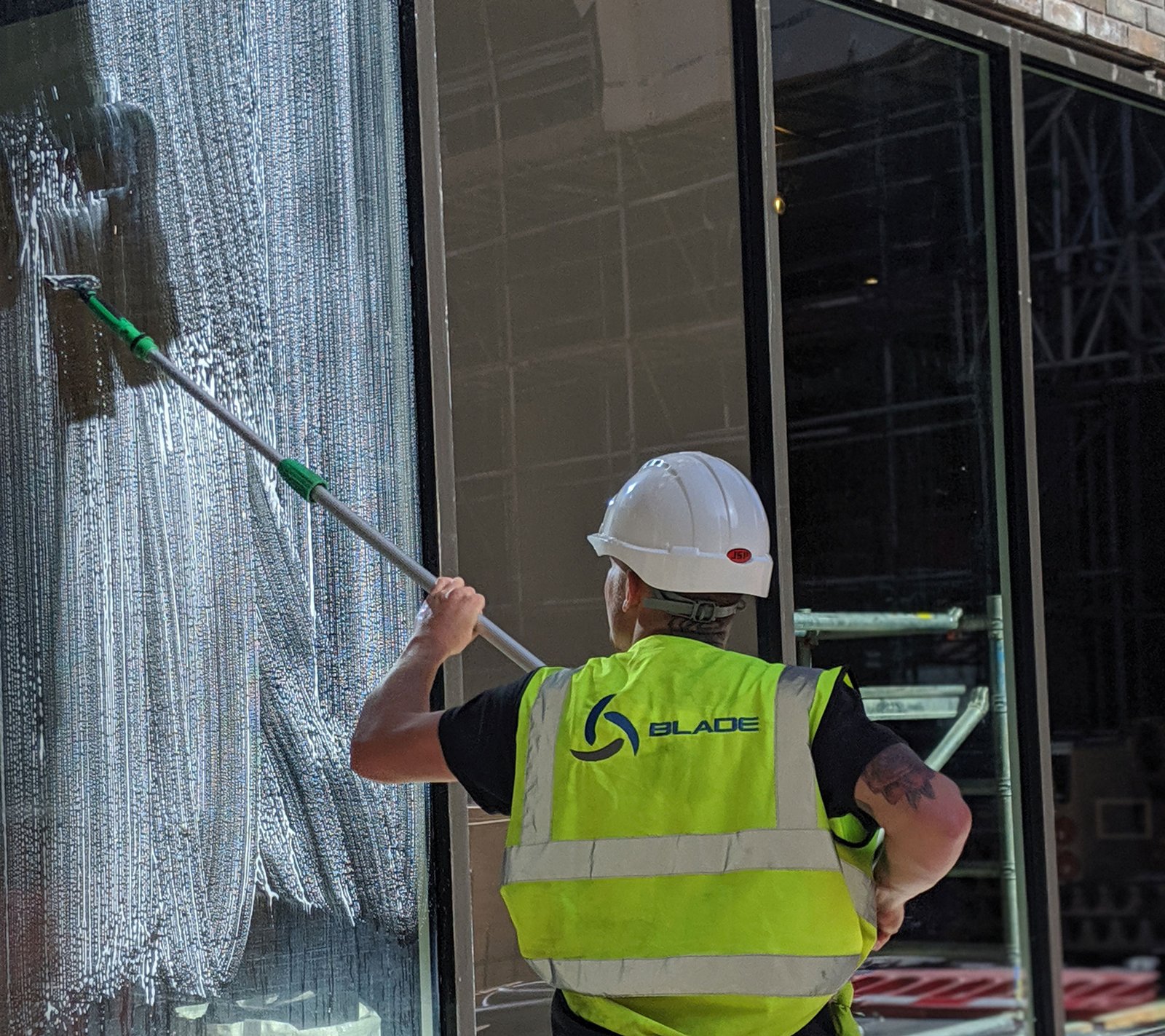
Interior cleaning covers glass partitions, floor-to-ceiling internal windows, lobby glass, and any windows that face inward. This type of cleaning is done using traditional squeegee methods and minimal water to protect equipment, flooring, and workspaces nearby. It is typically scheduled monthly or quarterly and works well during business hours if cleaners arrive before staff or during a lunch break.
Exterior Window Cleaning
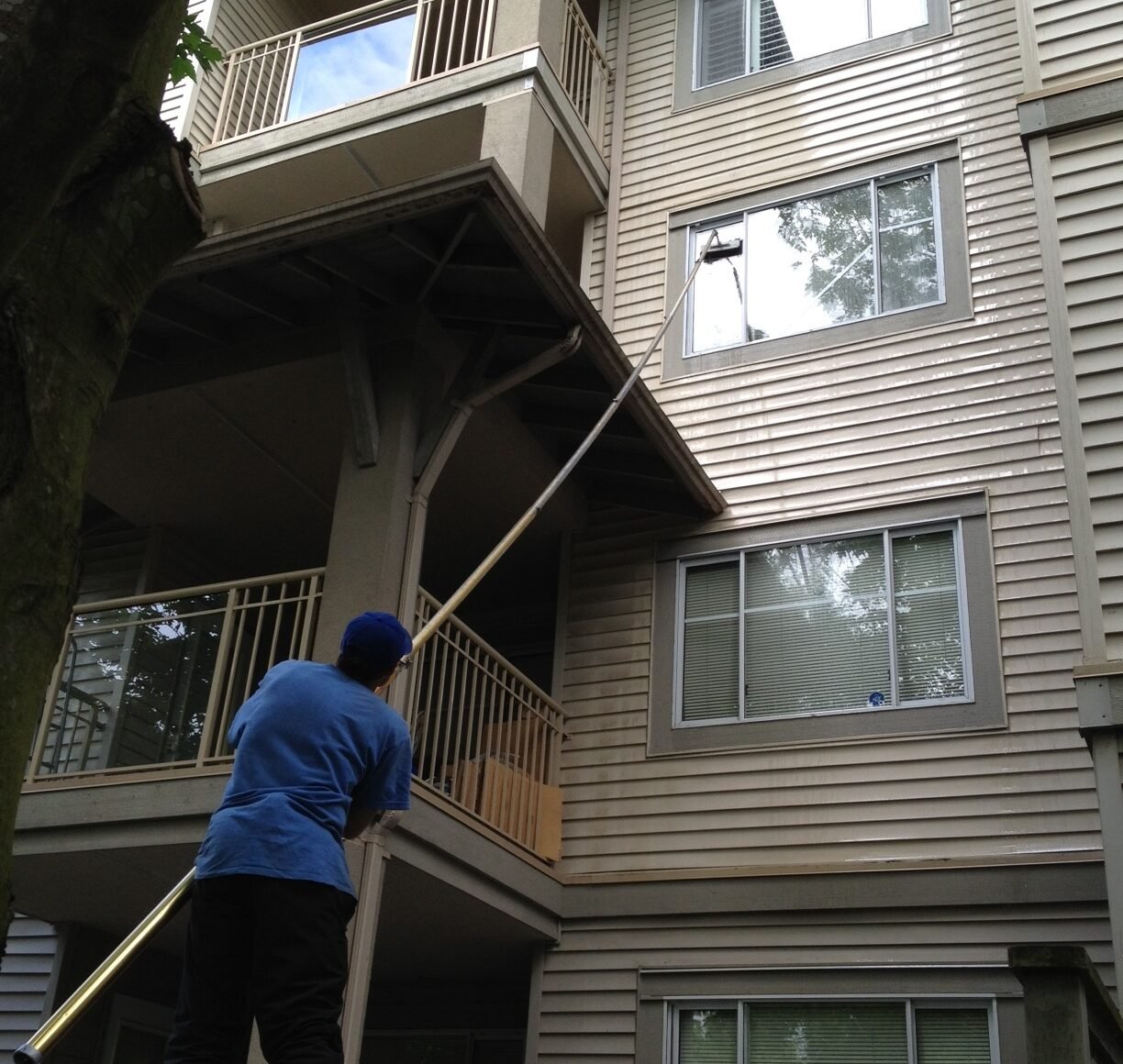
Exterior cleaning handles all outward-facing glass, shopfronts, and building facades. This is where most of the visible grime accumulates, from pollution and traffic film to bird droppings and hard water staining.
Depending on the height of the building, different access methods come into play. Ground-level and low-rise exteriors use water-fed poles or traditional squeegees. Mid-rise and high-rise buildings require rope access, boom lifts, or similar equipment.
High Rise Window Cleaning
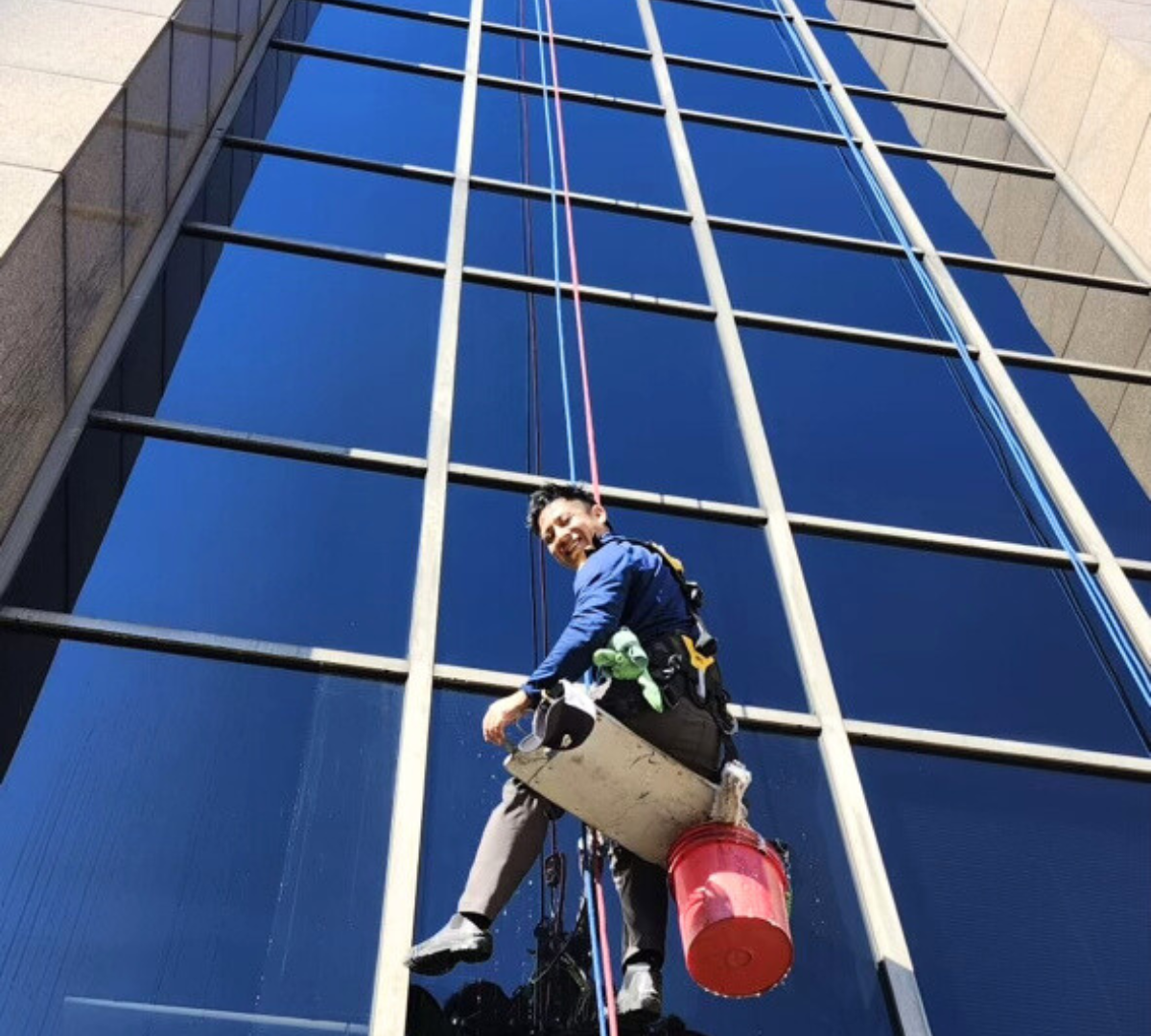
High-rise cleaning is a highly specialised service that requires formal certification, dedicated safety equipment, and detailed planning on every job. Rope access technicians and aerial platform operators work on some of the most challenging glass surfaces in the city, often at heights above 20 storeys. This work is governed by strict WorkSafe and SafeWork Australia regulations, and every technician must hold current Working at Heights and rope access certifications.
Specialised Glass and Facade Cleaning
Some commercial properties have glass that goes beyond standard window panels. Structural glass facades, frameless shopfronts, glass balustrades, skylights, solar panels, and double-glazed units all require specific cleaning approaches. Post-construction cleaning, which removes concrete splatter, silicone residue, and adhesive labels from newly completed buildings, also falls into this category.
|
Service Type
|
Best For
|
Recommended Frequency
|
Difficulty Level
|
|---|---|---|---|
|
Interior window cleaning
|
Offices, partitions, lobbies
|
Monthly to quarterly
|
Low
|
|
Exterior window cleaning
|
Shopfronts, facades, low-rise
|
Fortnightly to quarterly
|
Low to medium
|
|
High-rise window cleaning
|
Multi storey commercial buildings
|
Quarterly to biannual
|
High
|
|
Specialised glass and facade cleaning
|
Post construction, skylights, and structural glass
|
As required or annually
|
High
|
What Are the Commercial Window Cleaning Methods?
The method a professional window cleaning team uses is determined by the height of the building, the type of glass, the accessibility of the site, and the budget. Understanding the differences helps you ask the right questions when getting a quote.
Traditional Squeegee Method
This is the most widely used method for ground-level and interior cleaning. A professional washer, also called a mop or wand, is loaded with a cleaning solution and used to wet the glass. A rubber squeegee then draws the water and dissolved grime cleanly off the surface in overlapping strokes.
When done properly by a trained cleaner, the result is streak-free and spotless. This method works best on windows that can be reached safely from the ground or from within the building.
Water Fed Pole System
The water-fed pole system is one of the biggest advancements in commercial window cleaning over the past two decades. A carbon fibre telescopic pole, which can extend up to 12 or more metres, delivers a stream of highly purified water through a brush head at the top.
The water used is filtered through a reverse osmosis and deionisation system, removing all minerals and impurities.
When this ultra-pure water dries on glass, it leaves absolutely no residue because there is nothing in it to leave behind. The result is a spotless, streak-free finish achieved entirely from ground level, eliminating the need for ladders or scaffolding on many low to mid-rise buildings.
Rope Access Cleaning
For high-rise and hard-to-access buildings, rope access is the most practical and cost-effective solution. Technicians descend the building face using industrial harnesses and ropes anchored to rooftop rigging points.
This method requires IRATA certification (Industrial Rope Access Trade Association) and a site-specific Safe Work Method Statement on every job. It is safer and far less disruptive than scaffolding and allows cleaners to work on virtually any building face, including curved or recessed facades.
Aerial Lift and Platform Cleaning
Where buildings have open ground access, boom lifts and scissor lifts provide a stable elevated platform. These are commonly used on mid-rise buildings, shopping centres, and industrial facilities. They allow cleaning teams to carry heavier equipment, apply restorative treatments, and work more efficiently on large flat glass panels.
Cleaning methods compared:
|
Method
|
Best Height
|
Safety Level
|
Typical Cost Range
|
|---|---|---|---|
|
Traditional squeegee
|
Ground level, interiors
|
Low risk
|
Low
|
|
Water fed pole
|
Up to 6 storeys
|
Very low risk (ground based)
|
Low to medium
|
|
Rope access
|
Any height
|
High risk, strictly regulated
|
Medium to high
|
|
Aerial lift and platform
|
Up to 10 storeys, open access sites
|
Medium risk, requires spotter
|
Medium to high
|
Tools and Equipment Used by Professional Window Cleaners
There is a reason professional results look so different from a DIY attempt. Beyond skill and experience, commercial window cleaners arrive with purpose-built tools that are engineered specifically for large-scale glass cleaning.
Cleaning Tools
- Professional squeegees: These use medical-grade rubber blades that leave a perfectly clean draw without the streaking that consumer versions produce.
- T bar washers or mops: Designed to hold large amounts of solution and cover wide glass surfaces in a single pass.
- Pure water filtration systems: Van or trailer-mounted rigs that process tap water through reverse osmosis and deionisation, producing water that is as close to chemically pure as possible.
- Carbon fibre water-fed poles: Lightweight and rigid, allowing cleaners to work at significant heights without ladders.
- Heavy-duty glass scrapers: Used with the correct blade angle to safely remove hard mineral deposits, paint overspray, and construction debris from glass without causing scratching.
Safety Equipment
- Full body harnesses and descent control devices for rope access work.
- Anchor points and rigging equipment rated to meet Australian safety standards.
- Aerial work platforms with safety rails and weight-rated controls.
- Protective eyewear, non-slip footwear, and cut-resistant gloves.
- Site cones, barriers, and signage to protect pedestrians and bystanders.
Eco Friendly Cleaning Solutions
The shift toward biodegradable and low-impact cleaning products is well underway in the commercial cleaning industry. A growing number of professional window cleaners now use phosphate-free detergents, diluted vinegar-based solutions, or work exclusively with pure water systems that require no chemicals at all for exterior cleaning. This matters for businesses with environmental policies or green building certifications like Green Star or NABERS ratings.
The reason businesses should not attempt to DIY large or multi-storey commercial window cleaning comes down to risk. Without the correct equipment, technique, and safety systems in place, the chance of injury or glass damage is high, and the cost of either outcome far exceeds the cost of hiring a professional in the first place.
How to Clean Commercial Windows: Step by Step Process
Understanding the process a professional team follows helps you better evaluate the quote you receive and the service you get.
Step 1: Site Inspection and Risk Assessment
Before any cleaning begins, a qualified team leader walks the site and identifies potential hazards. This includes assessing access points, rooftop anchor conditions, pedestrian traffic flow, proximity to traffic, window conditions, and any nearby electrical hazards. A formal Safe Work Method Statement is prepared and signed off before work commences.
Step 2: Equipment Setup
The right equipment is selected and positioned based on the job requirements. This may involve setting up water-fed pole systems, rigging rope access anchors, positioning boom lifts, and placing safety barriers and pedestrian signage around the work zone.
Step 3: Cleaning Execution
Cleaning always works from top to bottom across the building to ensure dirty water and runoff do not contaminate already cleaned surfaces below. Cleaners work systematically across each panel, addressing frames, sills, and glass in sequence.
Step 4: Quality Inspection
Once cleaning is complete, a final walkthrough inspection checks for missed spots, streaks, residue, and any damage that may have been discovered during the clean. A competent team will point out glass damage or deterioration they notice during the job, even if they did not cause it.
Step 5: Maintenance Reporting
On scheduled commercial contracts, many providers offer a post-service report documenting what was cleaned, any issues observed, and recommendations for the next service. This paper trail is valuable for facility managers tracking maintenance schedules.
Cleaning process checklist:
- Site risks identified and SWMS document prepared
- Safety barriers and signage in place
- Equipment inspected and set up correctly
- Cleaning conducted top to bottom, exterior before interior
- Frames, sills, and glass all cleaned in sequence
- Final quality inspection completed and signed off
- Maintenance report provided to the facility manager
How Often Should Commercial Windows Be Cleaned?
There is no single answer that fits every business. The right frequency depends on your industry, your location, and the conditions your building is exposed to. A city centre office facing a busy road accumulates grime far faster than a suburban office with minimal traffic nearby.
As a general rule, the more public-facing your building is, and the closer it is to environmental pollution sources like the ocean, heavy traffic, or industrial areas, the more frequently your windows need attention.
|
Industry
|
Recommended Frequency
|
|---|---|
|
Offices (suburban)
|
Every 3 to 6 months (exterior)
|
|
Offices (CBD, high traffic)
|
Monthly to every 2 months
|
|
Retail stores and shopfronts
|
Weekly to fortnightly
|
|
Restaurants and cafes
|
Weekly (exterior facing kitchen exhaust areas more often)
|
|
Healthcare facilities
|
Monthly minimum, some areas weekly
|
|
Hotels and hospitality
|
Monthly exterior, fortnightly lobby and ground floor
|
|
High rise commercial buildings
|
Quarterly as a minimum, biannual for full facade
|
|
Post construction
|
Single deep clean before occupation
|
How Much Does It Cost for Commercial Window Cleaning?
Cost is one of the most common questions asked and one of the hardest to answer with a single number. Commercial window cleaning pricing is project-specific, and any company giving you a firm price without a site inspection is guessing.
Pricing Factors
- Building height: Ground floor cleaning costs far less than rope access on a 15-storey tower. Height increases complexity, time, and the certification requirements of the team.
- Accessibility: A building with easy ground access for a boom lift is cheaper to service than one surrounded by narrow footpaths or restricted air space.
- Window type: Standard float glass is straightforward. Structural glass facades, tinted glass, frameless shopfronts, and double-glazed units all require more care and specialist tools.
- Level of soiling: A building cleaned regularly costs less per visit than one that has gone two years without a clean and needs restorative treatment.
- Cleaning frequency: Ongoing contracts are generally priced lower per service than one-off cleans because the windows never get to the point of heavy soiling.
Average Cost Expectations
|
Building Type
|
Estimated Cost Per Clean
|
|---|---|
|
Small retail shopfront (ground level)
|
$80 to $200
|
|
Single storey office building
|
$200 to $500
|
|
Multi storey office (3 to 5 floors)
|
$500 to $1,500
|
|
High rise commercial (over 5 floors)
|
$1,500 and above, based on scope
|
|
Post construction clean
|
Quoted individually based on scope
|
For a more detailed breakdown of how commercial cleaning services are priced across Sydney, see the Spotzi Commercial Cleaning Cost Guide.
DIY vs Professional Commercial Window Cleaning
Let us be honest here. For a small ground-floor shopfront with three windows, a bucket and a squeegee can absolutely get the job done. But the moment you are dealing with anything above one storey, hard-to-reach angles, or glass that attracts serious commercial traffic grime, the calculation changes quickly.
When DIY Window Cleaning Works?
- Ground-floor shopfront with easy access
- Small office interior partitions during regular maintenance
- Routine spot cleaning between scheduled professional visits
Risks of DIY Window Cleaning
- Falls and injuries: Working at heights without proper training, harnesses, and equipment is a leading cause of serious workplace injuries in Australia.
- Streaky, smeared results: Consumer cleaning products and techniques leave residue that looks worse in certain light conditions than the original grime.
- Glass damage: Incorrect scraper angles, abrasive pads, or improper cleaning chemicals can permanently scratch or etch commercial glass, leading to costly repairs.
- Liability exposure: If an untrained employee falls or damages property during a DIY cleaning attempt, the business owner carries the responsibility.
Key Benefits of Hiring Professionals Commercial Window Cleaners
- Fully insured, certified, and compliant with Australian OH&S standards.
- Better results with specialist equipment and techniques.
- Recurring contracts provide consistent building maintenance with no staff time required.
- Professional teams identify and report window damage before it becomes a costly repair.
DIY vs Professional Comparison:
|
Factor
|
DIY
|
Professional
|
|---|---|---|
|
Cost upfront
|
Lower
|
Higher
|
|
Result quality
|
Variable, often streaky
|
Consistently high
|
|
Safety compliance
|
High risk unless trained
|
Fully compliant
|
|
Equipment
|
Basic consumer tools
|
Industrial grade
|
|
Liability coverage
|
Business owner carries risk
|
Contractor insured
|
|
Long term glass condition
|
Risk of damage over time
|
Maintained and monitored
|
Safety Standards and Compliance in Commercial Window Cleaning
Worker Safety Regulations
Commercial window cleaning that involves working at heights is regulated under the Work Health and Safety Act in Australia. Businesses that engage window cleaners are considered principal contractors for the purpose of the work, which means they have a legal obligation to ensure the company they hire is operating safely.
Any work at height above two metres requires a fall prevention system. For rope access work, the relevant standard is AS/NZS 4488 Industrial rope access systems. Safe Work Australia sets the national framework.
Insurance and Its Importance
A reputable commercial window cleaning company carries at a minimum:
- Public liability insurance: A minimum of $20 million is standard in commercial environments. This covers damage to property and injury to third parties.
- Workers’ compensation insurance: Mandatory in every state. Without it, if a worker is injured on your site, the liability may fall on the property owner.
Never hire a commercial window cleaner who cannot immediately provide proof of both.
Certifications
- Working at Heights certification: Required for any person who works above two metres.
- IRATA certification: The benchmark for rope access technicians. Three levels cover the full range of rope access competencies.
- White Card (Construction Induction): Required on any commercial construction or major maintenance site.
Risk Mitigation
The best commercial window cleaning companies manage risk through documented processes. Before every job, especially high-rise or rope access work, they prepare a site-specific Safe Work Method Statement that identifies every hazard and the control measures in place. Requesting this document before approving any work is not just good practice; it is sound risk management.
Industries That Benefit Most from Commercial Window Cleaning
Commercial window cleaning is not a luxury reserved for high-rise office towers. The industries that see the greatest return from a structured cleaning program span a wide range of sectors.
- Office buildings: High staff occupancy and client-facing spaces make windows a constant reflection of the business culture.
- Retail stores: Clean shopfronts directly influence foot traffic. There is solid evidence in retail research that clean, bright storefronts attract more walk-in customers.
- Hotels and hospitality venues: Guests form impressions from the car park. Pristine glass lobbies and room windows are part of the premium experience guests are paying for.
- Healthcare facilities: Hygiene compliance and infection control standards make regular cleaning non-negotiable. Dirty windows are not compatible with a clinical environment.
- Government buildings: Public-facing facilities that need to project confidence, trust, and competence through their physical presentation.
Industrial facilities: Factories and warehouses with skylights and high bay windows benefit from regular cleaning to maintain worker safety lighting levels. - Educational institutions: Schools, universities, and childcare centres have strict hygiene obligations and high occupancy environments where air quality matters.
This is a segment of commercial window cleaning that many competitors barely touch on. The reality is that a glazier plan tailored to each industry delivers far better outcomes than a one-size-fits-all approach. For an overview of how professional commercial cleaning is structured across Sydney, see the list of the best commercial cleaning companies in Sydney.
How to Choose the Right Commercial Window Cleaning Company?
Finding a reliable commercial window cleaning contractor is not about finding the cheapest quote. It is about finding a team you can trust to work safely on your building and deliver consistent results every single time.
- Experience and Certifications: Ask how long the company has been operating and whether their technicians hold current Working at Heights and rope access certifications. Request a copy of their credentials before the first job begins.
- Safety Policies: Does the company provide a site-specific Safe Work Method Statement for your building? Do they carry a formal emergency response plan? A professional company will have these documents ready without being asked twice.
- Equipment and Technology: Companies still using outdated equipment are falling behind. Look for teams using pure water-fed pole systems for exterior cleaning, well-maintained rope access rigging, and documented equipment inspection records.
- Transparent Pricing: A reputable company provides a detailed written quote after a site visit. Watch out for companies quoting exclusively over the phone without seeing the job. Hidden costs and surprise invoices are a common issue in the industry.
- Maintenance Plans: The best commercial window cleaning relationships are ongoing. A company that offers a structured maintenance plan with scheduled visits means your windows are managed proactively rather than reactively, and your costs per service are typically lower as a result.
Hiring checklist for facility managers:
- Verified evidence of public liability insurance (minimum $20 million)
- Verified workers’ compensation insurance
- Working at Heights and rope access certifications confirmed for relevant staff
- Site-specific Safe Work Method Statement provided before work begins
- Written, itemised quote provided after a site inspection
- References or verifiable reviews from comparable commercial clients checked
- Maintenance plan and contract terms reviewed and agreed in writing
What are the Common Commercial Window Cleaning Challenges (And Solutions)?
Even the most well-maintained commercial properties run into window cleaning challenges that require specialist knowledge to handle properly.
- Hard water stains and mineral deposits: In areas with hard municipal water or coastal properties exposed to salt spray, white chalky mineral buildup on glass is extremely common. Standard cleaning solutions do not dissolve calcium and silica deposits. Professionals use mild acid-based treatments or specialist mineral removal products applied carefully to dissolve the buildup without damaging the glass or surrounding frames.
- High-rise and restricted access: Not every building is designed with window cleaning in mind. Some facades lack proper anchor points for rope access, and some buildings are surrounded by streets or obstacles that make boom lifts impractical. Experienced commercial cleaning companies carry out a detailed access assessment before quoting and identify the most efficient and safe access solution for buildings with constraints.
- Unpredictable weather conditions: Scheduling window cleaning in a coastal city like Sydney means working around wind, rain, and humidity. Professional teams monitor weather forecasts closely and will reschedule if conditions pose a safety risk or would compromise the quality of the clean. Cleaning in direct sunlight can also cause cleaning solutions to dry before they are removed, leaving streaks. Early morning starts are often planned to avoid this.
- Pollution and traffic film build up: CBD buildings and those near major roads accumulate a fine oily layer of combustion particles, dust, and brake dust that bonds strongly to glass surfaces. Standard cleaning removes the surface layer, but stubborn traffic film often requires a dedicated degreasing stage before the main clean begins.
Maintenance Tips to Keep Windows Cleaner Longer
Getting professional cleaning done is only part of the equation. The steps you take between visits make a real difference to how quickly your windows deteriorate.
- Set a formal cleaning schedule and stick to it. Irregular cleaning allows grime to bond to the glass over extended periods and makes each clean more difficult and expensive.
- Trim nearby vegetation. Trees and shrubs that brush against building glass deposit sap, pollen, and organic debris that accelerates surface soiling.
- Address bird deterrents on ledges. Bird droppings are uric acid-based and will etch into glass permanently if left for extended periods. Anti-roosting spikes and deterrents on ledges significantly reduce the frequency of this type of soiling.
- Request a window condition report from your cleaner. Every skilled commercial cleaner notices things during a clean. Ask them to document any frames showing signs of seal failure, corrosion, or glass damage. Early detection saves costly repairs.
- Keep frames and sills clean between visits. Dirt accumulating on sills and frames washes onto the glass during rain. A quick wipe down of ledges between professional visits slows the rate of resoiling significantly.
- Review your cleaning frequency annually. As buildings age and surrounding environments change, the required frequency of cleaning often shifts. A quick annual review with your contractor ensures the schedule is still appropriate.
Need Reliable Commercial Window Cleaning for Your Business?
At some point, every business owner or facility manager reaches the same conclusion: the right time to hire a professional commercial window cleaning team is before a problem develops, not after.
If your building is overdue for a professional clean, if you are setting up a new maintenance contract, or if you are trying to understand what a quality cleaning program should look like for your specific industry, the team at Spotzi can help.
We work with office buildings, retail centres, hotels, healthcare facilities, and everything in between across Greater Sydney. Our approach is straightforward: we assess your building properly, provide a clear and honest quote, and show up consistently with qualified people and the right equipment for the job. When you are ready to talk about your building specifically, we are here.